

Selling Laminate, Vinyl, and Hardwood Flooring by Square Meter: PL Custom Price Calculator Guide
Flooring customers rarely think in products; they think in rooms. They know their living room is 4.5 by 3.8 meters and they want to know what it will cost, how many packs to buy, and whether the total includes offcuts.
Detalles del Evento
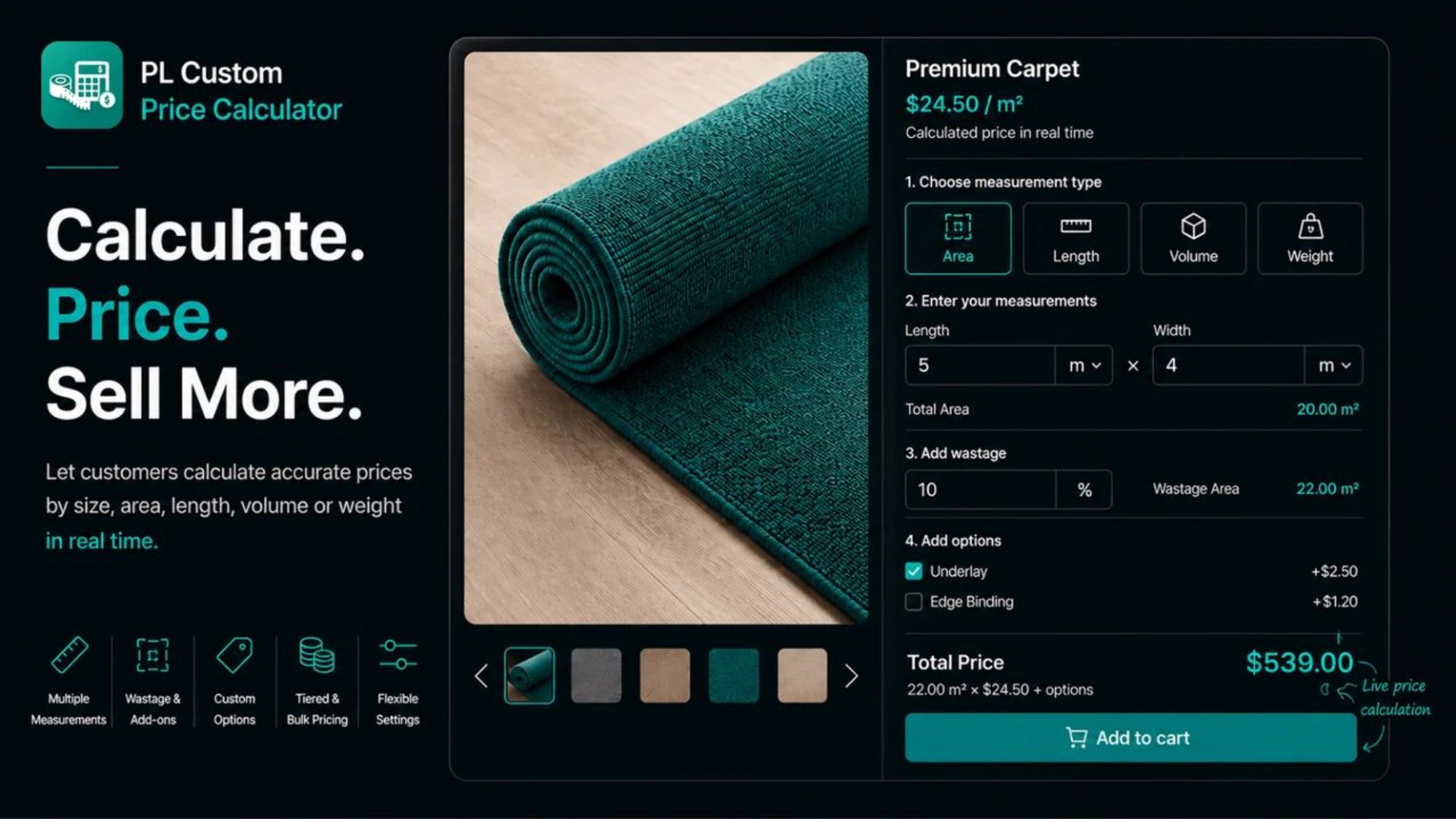
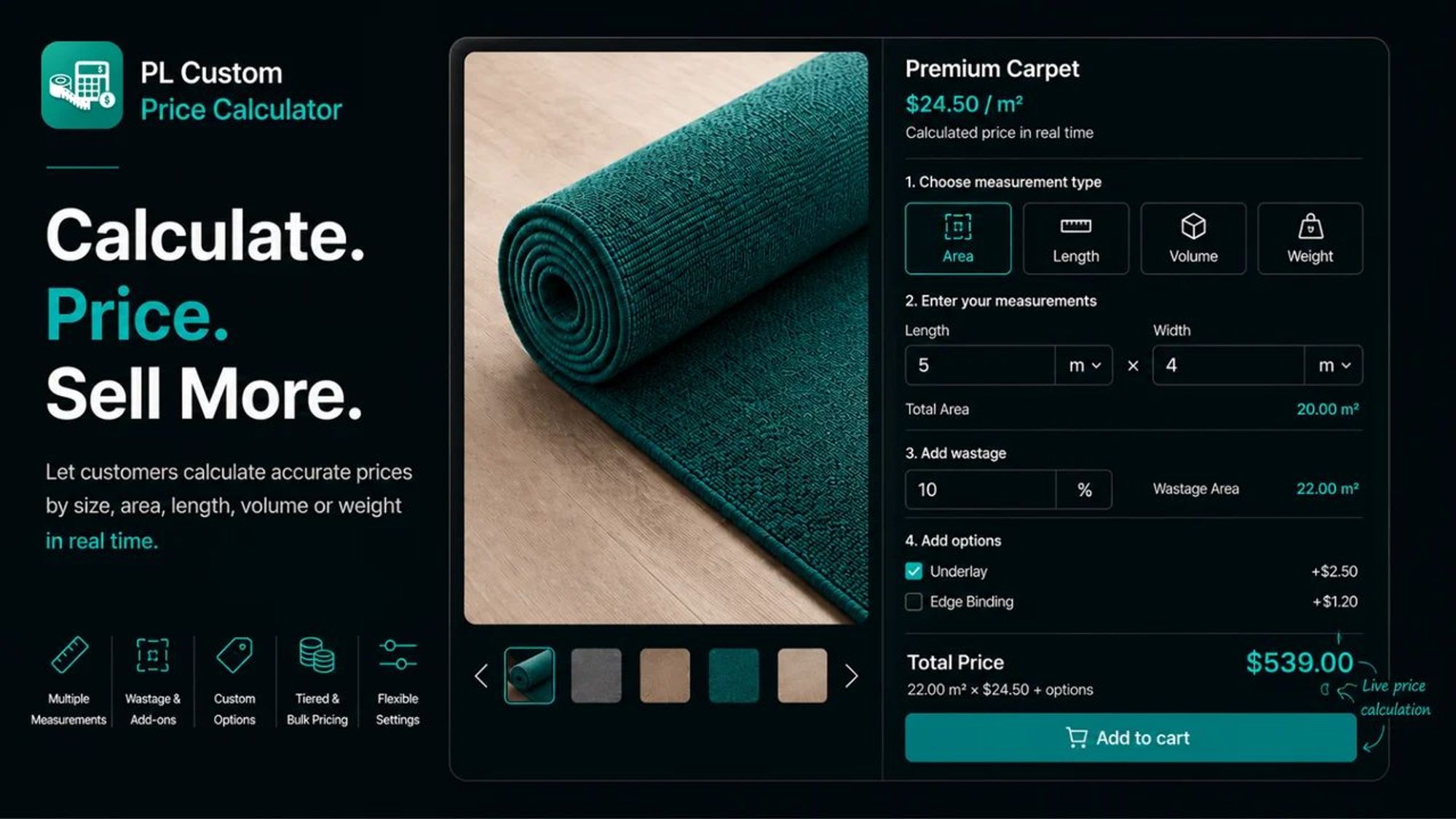
Flooring customers rarely think in products; they think in rooms. They know their living room is 4.5 by 3.8 meters and they want to know what it will cost, how many packs to buy, and whether the total includes offcuts. Standard Shopify variants can't answer any of that, which is why more flooring retailers add a shopify measurement price calculator to their product pages. It turns room dimensions into an area, adds wastage, and returns a clear price in real time. This guide explains how laminate, vinyl, and hardwood differ, how to calculate coverage in square meters, and how to set up the pricing with PL Custom Price Calculator.
Why Flooring Needs Measurement-Based Pricing
Flooring is sold per square meter, but bought per room. That mismatch is the main source of friction in online flooring sales.
The problem with fixed variants
You can create variants for pack sizes, but you can't create a variant for every possible room. A customer with a 17.1 m² room and another with a 23.6 m² room both need a different quantity, and neither wants to do the rounding themselves.
What customers expect from an online flooring store
An instant price based on their own measurements
An honest estimate that already includes offcuts and waste
The number of packs or boxes to add to the cart
A view of extras such as underlay and trims before they check out
Laminate, Vinyl, and Hardwood: How They Differ for Pricing
All three are priced by area, but they behave differently once installed. Understanding those differences helps you set sensible wastage, minimums, and pack rules.
Laminate flooring
Laminate is usually sold in sealed packs covering a fixed area, often between about 1.5 and 2.5 m² per pack. Because the packs are sealed, customers must buy whole packs. It is typically a straightforward click-lock install, so wastage is modest for simple rooms.
Vinyl flooring (plank, tile, and sheet)
Luxury vinyl planks and tiles are also sold in packs, so the same whole-pack logic applies. Sheet vinyl is different: it is sold from a roll of fixed width, so the length needed depends on the room's shape and the roll width, and wastage can be higher. If you sell both formats, keep them on separate pricing rules.
Hardwood flooring (solid and engineered)
Hardwood is often sold by the square meter in packs or bundles. Solid boards are commonly graded and culled for natural defects, so installers often recommend ordering more extra than for laminate. Engineered hardwood behaves more like a click-lock product, though this varies by manufacturer.
The Flooring Coverage Formula in Square Meters
The steps are the same for every flooring type. Only the wastage percentage and pack coverage change.
Step 1: Measure the room and calculate area
Multiply length by width. For a 4.5 m by 3.8 m room, the area is 17.1 m². For L-shaped rooms, split the space into rectangles and add them together. Alcoves, bay windows, and hallways can be added as separate rectangles.
Step 2: Add wastage
Multiply the area by one plus the wastage percentage. With 10% wastage, 17.1 m² becomes 18.81 m².
Step 3: Convert to packs and round up
Divide by the coverage of one pack and round up to a whole number, because sealed packs can't be split.
Step 4: Calculate the total price
Multiply the number of packs by the pack price, or multiply the adjusted area by the price per square meter if you sell by area.
How Much Extra Flooring Should Customers Order?
These are commonly cited industry ranges. Adjust them to your product range and follow manufacturer guidance where it exists.
Situation
Typical wastage