

Event details
Whether you're coping with anxiety, PTSD, depression, or another mental health condition, having an ESA by your side can significantly improve your overall well-being.
But in order to legally recognize that bond—especially when it comes to housing protections—you need an ESA letter. This letter, written by a licensed mental health professional, confirms that your animal plays a legitimate role in your emotional and psychological care.
In this guide, we’ll explain exactly what an ESA letter is, why it matters, and how it fits into your mental health journey. You’ll learn how to get a valid ESA letter online, what your legal rights are under the Fair Housing Act, and how to spot fake or misleading services. Whether you're seeking peace of mind or protection from unfair housing policies, this guide will help you take confident, informed steps forward.
What Is an ESA Letter?
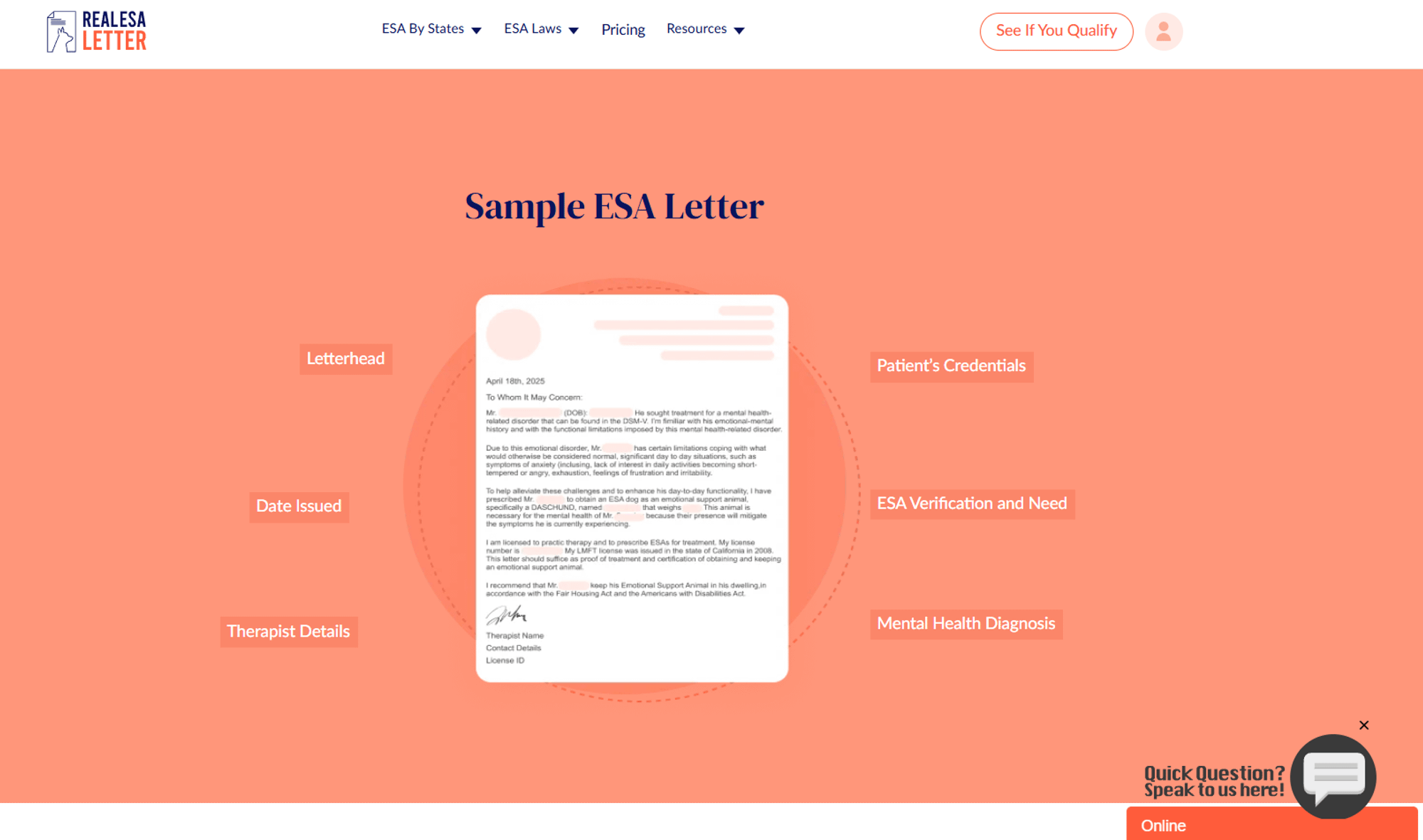
An Emotional Support Animal letter is an official document provided by a licensed mental health professional (LMHP). This letter confirms that a person has a qualifying mental or emotional disability and that the presence of an emotional support animal is recommended as part of their treatment.
Unlike service animals, ESAs don’t need specific training. However, with the proper documentation, they can live with you in no-pet housing and help you avoid fees.
An ESA letter typically includes:
The date it was issued
The professional's full name, license number, and state of licensure
A statement of recommendation
Confirmation that the person is under the provider’s care
Language referencing protection under the Fair Housing Act
Who Can Qualify for an ESA Letter?
You may be eligible for an ESA letter if you're diagnosed with a psychological condition that significantly limits your ability to function. The diagnosis must be made by a qualified professional, such as a psychologist, psychiatrist, licensed counselor, or social worker.
Common qualifying conditions:
Generalized Anxiety Disorder (GAD)
Panic attacks
Post-Traumatic Stress Disorder (PTSD)
Social anxiety
Major depressive disorder
ADHD
Phobias
Insomnia or sleep disturbances caused by mental distress
Having an ESA can be a non-invasive yet effective addition to your treatment plan, often helping to stabilize mood, reduce feelings of isolation, and increase routine adherence.
How to Get an ESA Letter Online
The digital age has made mental health services more accessible, and ESA letters are no exception. Many providers now offer telehealth-based services that allow you to complete evaluations online. In urgent cases, some services even offer an instant emotional support animal letter, issued on the same day after a licensed professional review.
Steps to obtaining an ESA letter online:
Fill out a mental health assessment: This questionnaire gathers background on your emotional health, symptoms, and animal relationship.
Licensed therapist review: A professional will assess your case based on federal and state law guidelines.
Letter issuance: If approved, you receive a signed and legally compliant ESA letter via email or mail.
Tip: Be cautious of websites that promise letters without any mental health screening—these are often scams.
Do You Need to Speak with a Therapist?
Contrary to popular belief, you don’t always need a video or phone call with a therapist to obtain an ESA letter. Many reputable providers use asynchronous evaluations where you fill out detailed forms reviewed by licensed clinicians.
Opting for an ESA letter no live therapist session can still meet federal and clinical guidelines as long as a valid diagnosis is made and a licensed provider signs the letter. This process is helpful for individuals with anxiety around live sessions or limited availability.
How to Spot Fake ESA Letters
Not all ESA letters are created equal. Unfortunately, there are fraudulent websites that sell template letters with no legal standing or medical review. These letters are often rejected by landlords, airlines, and employers.
To check if ESA letter is real, look for these key features:
Therapist’s full name, license number, and state
Explicit mention of the Fair Housing Act
Clear statement recommending the animal
Confirmation that the therapist is treating the patient
Date of issuance (within the last 12 months)
Red flag: If your ESA letter is auto-generated in minutes without therapist involvement, it is likely invalid.
What If a Landlord Rejects Your ESA Letter?
Despite legal protections, some landlords are either unaware of the Fair Housing Act or deliberately try to deny legitimate ESA requests. If you're facing ESA letter denial by landlord, here’s what you can do:
Step-by-step actions:
Provide documentation: Share your valid ESA letter with your landlord.
Educate: Politely inform them that under the FHA, emotional support animals are not pets and must be accommodated.
Respond in writing: Keep all communications in writing to create a record.
File a complaint: If the landlord continues to deny your rights, you can submit a formal complaint to the U.S. Department of Housing and Urban Development (HUD).
Important: Landlords cannot ask about your specific diagnosis or charge pet deposits for ESAs.
An ESA letter is more than just a piece of paper—it’s a validation of your mental health needs and your right to live with emotional support. Whether you're dealing with chronic anxiety or stress-induced insomnia, emotional support animals can offer life-changing support. By following the proper steps and working with licensed professionals, you can ensure your ESA letter is legally valid and emotionally empowering.
If you're looking to start the process, prioritize legitimacy, privacy, and compliance. The right ESA letter can give you the freedom to heal without restrictions.










 provide much more than comfort—they offer a sense of safety, routine, and emotional stability that can make everyday life feel manageable. )